

































This page was created to
Clear the Air and Defend Hollywood Burbank Airport, FAA Airspace Safety Leadership, & the Focus on the Challenge that Van Nuys Airport Faced,
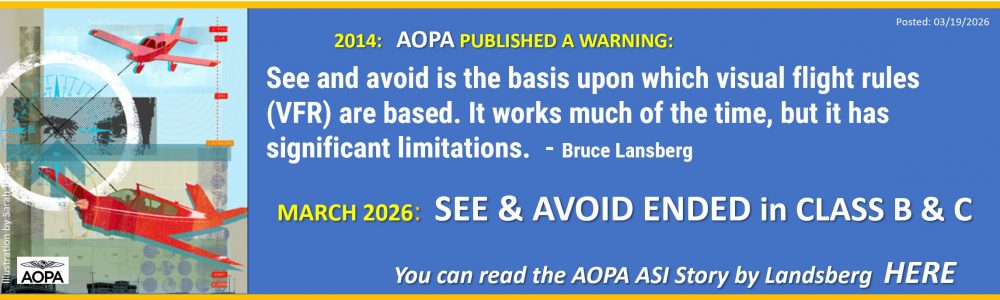
03/19/2026 FAA Ends ‘See and Avoid’ In Mixed Helicopter Traffic Areas - From AvWeb - "The FAA has suspended visual separation for helicopters and fixed-wing aircraft in high-traffic airspace. - The Federal Aviation Administration (FAA) is suspending the use of visual separation between helicopters and fixed-wing aircraft in some of the nation’s busiest airspace, requiring controllers to instead use radar to maintain standard separation, the agency announced Wednesday.
The change applies to Class B and Class C airspace as well as Terminal Radar Service Areas, where helicopter traffic frequently crosses arrival and departure paths near major airports.
Under the new general notice (GENOT), controllers will no longer rely on pilots to “see and avoid” other aircraft in these environments. Instead, they will actively manage traffic using defined lateral or vertical separation standards.- Federal officials said the move follows a year-long safety review that identified an overreliance on visual separation in high-traffic areas—particularly where helicopter and airline operations intersect." Read more about this important notice Here.
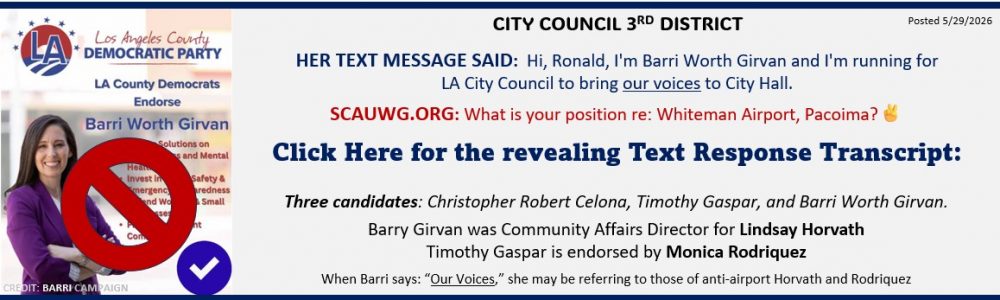
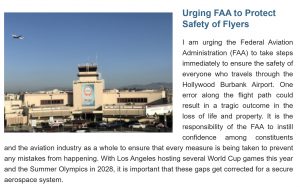
San Fernando Valley U. S. Representative has Voiced an Opinion:
CONGRESSWOMAN LUZ RIVAS (3/13/2026) Wrote:
In the interest of Truthfulness:
The Following Objective Data is meant to enhance the real issue of Safety in the San Fernando Valley Airspace and to Defend the FAA's Positive Course of Action.
The Problem: Identify If & Where the Loss of Safe Aircraft Separation Over the Valley Occurs?
The Answer: The Best Verifiable Tool We Can Use is Traffic Collision Avoidance System (TCAS) as the Location of any Actual Separation Loss is illustrated.
Conclusion: TCAS Resolution Alert (RA) Locations are near the Van Nuys Airport while Aircraft are on the Approach to Hollywood Burbank Airport (Not at the Airport)
Analysis: TCAS - A Valuable Safety Tool at Altitude -Works! A list of current TCAS Advisory Alerts can be found HERE.
San Fernando Valley Resolution Advisories (RAs) near Hollywood Burbank Airport (BUR. These primarily occur during arrivals to Runway 8, where the flight path crosses directly over the busy traffic patterns of nearby Van Nuys Airport (VNY), This specific airspace is characterized by high volumes of mixed traffic, including commercial airliners, private aircraft, and helicopters, operating in close proximity.
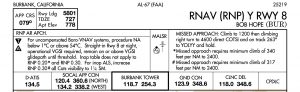

An Approach to Rwy 8 Hollywood Burbank (Bob Hope) Airport
. This specific airspace is characterized by high volumes of mixed traffic, including commercial airliners, private aircraft, and helicopters, operating in close proximity.
FAA ACTION:
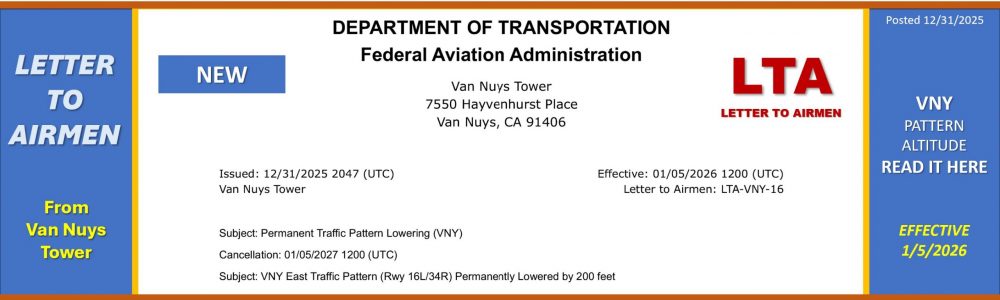
To address frequent Traffic Alert and Collision Avoidance System (TCAS) Resolution Advisories (RAs) in the San Fernando Valley, the FAA permanently lowered the Van Nuys Airport (VNY) traffic pattern by 200 feet, effective January 5, 2026. This move aimed to increase vertical clearance between smaller aircraft at Van Nuys and commercial airliners descending into Hollywood Burbank Airport (BUR), a zone previously identified by the NTSB as a "safety hotspot" for potential mid-air collisions.
Airspace Safety Modifications (2025–2026)
The proximity of VNY (handling up to 700 daily flights) to the BUR final approach course created a high volume of TCAS alerts due to flight configurations rather than actual loss of separation.
Federal Aviation Administration
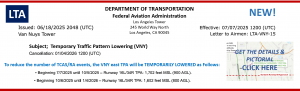
EXAMPLE: Van Nuys Airport Airspace Study - Click on Image for Details
- Van Nuys Pattern Reduction: After a successful evaluation in 2025, the FAA permanently lowered the VNY east-side traffic pattern altitude from 1,000 feet AGL to 800 feet AGL.
- Increased Clearance: This change increased the vertical gap between VNY traffic and Burbank-bound arrivals from 600 feet to 800 feet.
- Impact: Preliminary data indicated a measurable reduction in TCAS alerts for Burbank arrivals following the implementation.
Current Risk Factors & Critical Areas
Despite the altitude adjustments, officials and pilots remain concerned about the "demanding landing environment" in this corridor.
- Burbank Runway 8 Approaches: Pilots arriving at BUR Runway 8 are advised to be on high alert for VFR traffic in the VNY pattern, especially east of VNY where the traffic pattern altitude is 1,800 feet MSL.
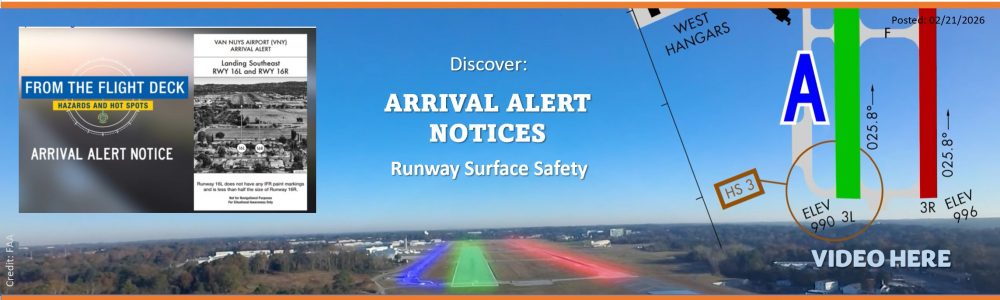
- Conflict Zones: The BUR Runway 8 approach path directly overflies the south end of VNY Runway 16R and both its east and west traffic patterns.
- Airlines Reporting Events: Southwest, Spirit, and Alaska Airlines have frequently reported TCAS RAs in this specific area.
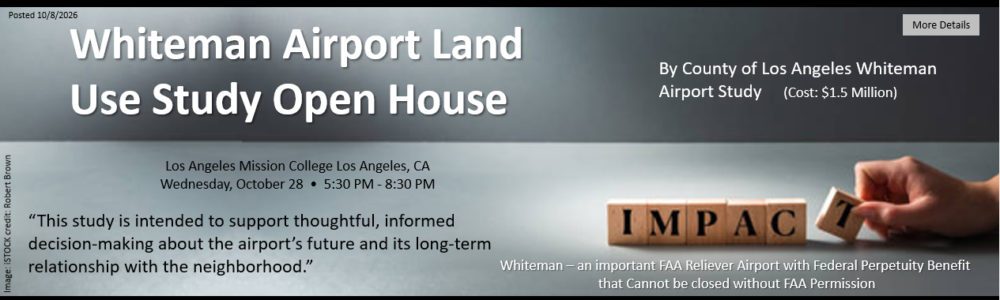
- Whiteman Airport (WHP) Context: Whiteman Airport remains operational approximately 5 miles northwest of BUR, with a traffic pattern altitude of 1,225 feet AGL. While the FAA is currently in a legal dispute with LA County regarding the airport's potential closure, it continues to support local wildfire and emergency response. Webmaster Note: It should be stated that WHP has the FAA benefit of perpetuity, and serves as a "reliver" airport, and is an important part of the NAS. The nearby "Four Stacks" now being demolished but to be replaced by a new power facility serves as the location fer Local ATC approaches and Departures e.g.
IAPs - Instrument Approach Procedures RNAV (GPS) RWY 12 download (515KB) VOR-A download (427KB) NOTE: Special Alternate Minimums apply download (37KB) WHITEMAN ONE (OBSTACLE) download (264KB) NOTE: Special Take-Off Minimums/Departure Procedures apply
Additionally at Burbank :
| FOUR STACKS VISUAL RWY 15 | download (164KB) |
Pilot Advisory for the Area
The VNY Control Tower and FAA provide specific guidance to minimize further TCAS activity:
- Maintain Altitudes: Pilots operating at VNY must strictly adhere to the updated traffic pattern altitudes and climb gradients to avoid triggering RAs for Burbank arrivals.
- Wake Turbulence Caution: Vigilance is required for wake turbulence due to the minimum separation between VNY traffic and the commercial jets overflying them.
- Avoid Overflying Finals: Pilots are cautioned to remain alert to traffic on parallel runways and ensure they do not overfly final approach
Community Engagement - Van Nuys Airport
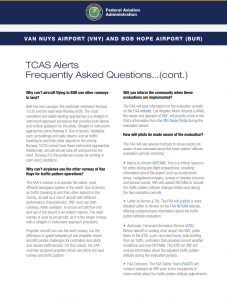
Van Nuys Airport (VNY) and Bob Hope Airport (BUR) are very close to each other, just 7 miles apart, and they both play important roles in the U.S National Airspace System (NAS). Because of nearby hills, buildings, radio towers, and busy airspace, planes landing at BUR’s Runway 8 from the west fly over planes using the VNY VFR traffic pattern. While the distance between these planes meets FAA aircraft separation safety rules, planes heading to BUR might still get alerts from their collision avoidance system (TCAS) if a VNY plane comes too close.
TCAS alerts alert pilots about potential collision risks and suggest actions to avoid them, like stopping a landing and quickly climbing. These actions, called missed approaches or go-arounds, are normal and safe, allowing planes to attempt landing again. However, they increase the workload for pilots and air traffic controllers, and can lead to delays, more fuel use, and extra noise and pollution.
BUR experiences a high number of TCAS alerts, with a rate far exceeding the NAS average. Reducing these alerts during landing is important to enhance safety and efficiency, while also considering environmental effects. To cut down on TCAS alerts for BUR flights, the FAA plans to run two evaluation periods where planes flying in the east VNY airspace will fly 100 feet lower than usual for 90 days, then 200 feet lower for the next 90 days, for a total of 180 days. Aircraft will fly at the pattern at 900-foot above-ground-level (AGL) (about 1,700 feet mean sea level (MSL) altitude) for a period of 90 days, then 200 feet lower (1,600 feet MSL). The FAA performed a safety review of this planned evaluation and did not identify additional safety hazards.
The FAA intends to start these tests in July and will share updates online. After the tests are done, they will examine the test data to decide the best approach moving forward, making safety the top priority.
Update
February 6, 2026
The FAA will permanently maintain the lowered air traffic pattern around Van Nuys Airport after preliminary data indicated a reduction of Traffic Collision Avoidance System (TCAS) alerts for Burbank arrivals. The FAA lowered the pattern by 200 feet during an evaluation in 2025 to see if that would reduce conflicts between aircraft circling above Van Nuys and aircraft landing at Hollywood Burbank Airport. The operation will be closely monitored to ensure its continued success in reducing TCAS alerts.
Supporting Documents
Traffic Alert and Collision Avoidance System (TCAS) Information for Operators in the Southern San Fernando Valley
Project Background:
The final approach course to Runway 8 at Bob Hope “Hollywood Burbank” Airport (BUR), Burbank, CA, crosses over the south end of Runway 16R as well as both the east and west-side traffic patterns at Van Nuys Airport (VNY), Van Nuys, CA. Aircraft on approach to BUR Runway 8 have been receiving TCAS Resolution Advisories (RAs) when overflying aircraft in traffic patterns as well as fast climbing turbojet departures at VNY. Southwest, Spirit, and Alaska Airlines have reported numerous events.
Purpose of this Meeting:
This meeting is an effort to inform pilots and receive input from both pilots and industry on the TCAS RA events between aircraft on approach to RWY 8 at BUR and aircraft in the traffic pattern and fast climbing jet departures at VNY, as well as to share what current and past efforts have been to mitigate this safety issue.
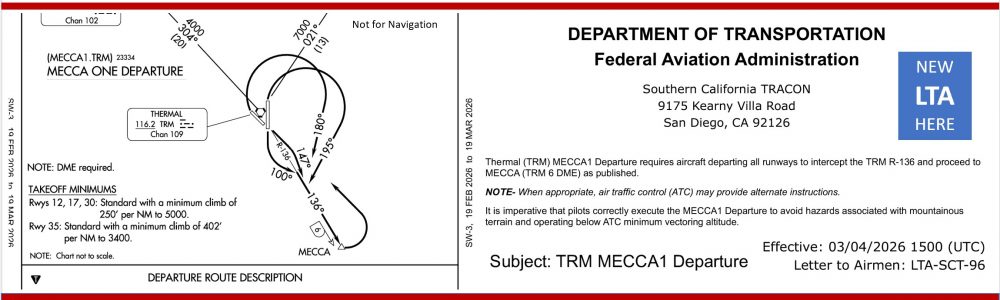
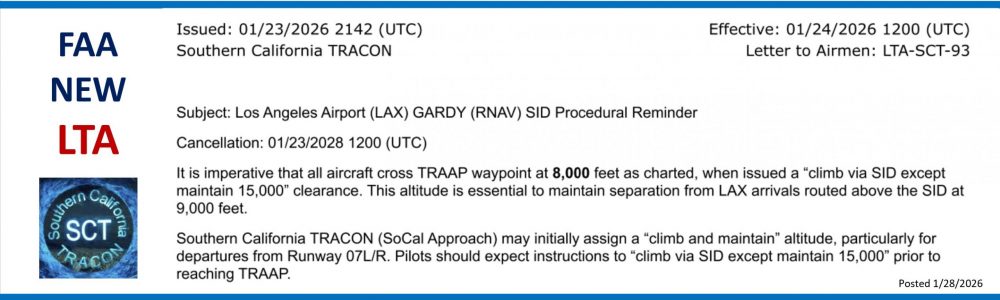
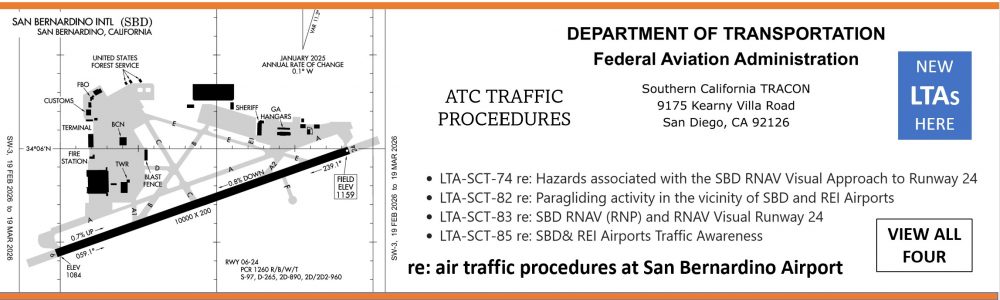
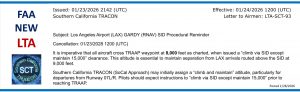
Current Efforts - Letter to Airman (LTA):
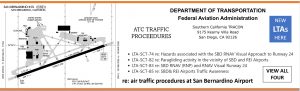
EXAMPLE: FAA LTAs throughout the LA Basin Area - Click on Image for Details

Click on Image for Details
Click on Image for Details
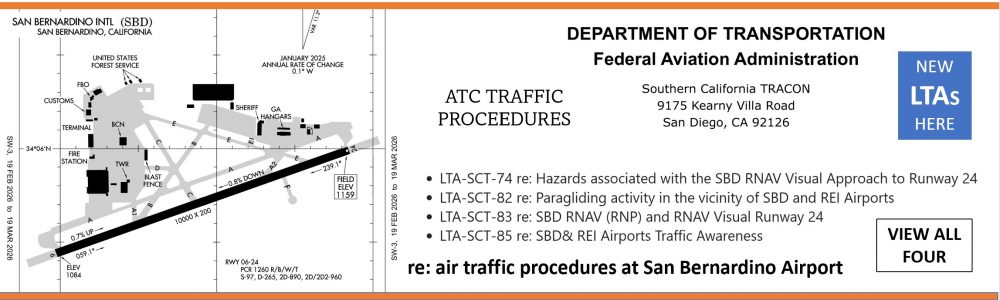
Published LTAs for BUR and VNY, highlighting the situation to both the BUR arrival perspective as well as the perspective from VNY pattern traffic. These LTAs illustrated the need for altitude compliance and traffic awareness, as well as wake turbulence awareness.
Domestic Notice: The Federal Aviation Administration published a Domestic Notice addressing VNY pattern traffic and the potential conflict with BUR arrivals.
Chart Supplement: Airport remarks for both BUR and VNY have been updated to bring awareness to the potential for TCAS RAs in the area due to VNY traffic patterns and fast climbing jet departures, with VNY’s remarks emphasizing strict adherence to pattern altitudes and climb rates.
Online Resources on How TCAS Works:
https://www.faa.gov/documentlibrary/media/advisory_circular/tcas%20ii%20v7.1%20intro%20booklet.pdf
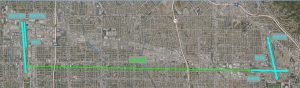
FLIGHT TRACK - VNY to BUR
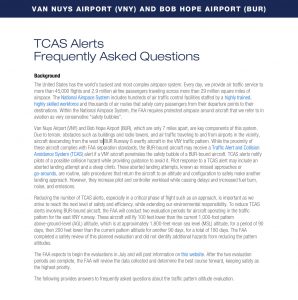
FAA Addresses Frequently Asked Questions

Burbank Airport could be next scene of mid-air crash, airlines warn NTSB - from ABC 7
Webmaster Comment: "Perhaps this headline could be written differently. Based upon the above data, the area of concern is the Approach Route over Van Nuys Airport, THE LOCATION of the BURBANK AIRPORT itself is Not the Primary Concern."
BURBANK, Calif. -- The chair of the National Transportation Safety Board on Tuesday expressed concerns over the dangerous possibility of the next deadly mid-air collision happening at Hollywood Burbank Airport.
The NTSB chair says its commercial airlines that are sounding the alarm, and says the FAA should take the warnings from airlines seriously.
"I keep hearing about other areas in the airspace where they are concerned. Burbank is one where commercial airlines have called me to say the next mid-air is going to be at Burbank, and nobody at FAA is paying attention to us," NTSB Chair Jennifer Homendy said at a hearing, referring to the Federal Aviation Administration. "So, whether it is involving helicopters or not, people are raising red flags, and why aren't people listening? The FAA has to ensure safety. That is their job."
Tuesday's hearing was part of the investigation into a deadly mid-air crash near Washington, D.C. last year that left 67 people dead and involved an Army helicopter and an American Airlines plane.
Whether it's helicopters like the deadly crash in D.C., or private aircraft, the concern is the amount of traffic coming and going from Burbank Airport and Van Nuys Airport in a relatively small airspace. Both airports are extremely busy.
The FAA says it's been focusing on airports like Van Nuys and Burbank for safety improvements. It says traffic collision alerts have been reduced for Burbank, and the Van Nuys traffic pattern has been lowered permanently.
The FAA released the following statement after Homendy's remarks.
"The FAA acted immediately to improve safety following the tragic mid-air collision, both at DCA and around the country. In February 2025, we began using innovative AI tools to identify similar hotspots with high volumes of mixed helicopter and airplane traffic and implement appropriate mitigations. One of our primary focus areas was Van Nuys Airport and nearby Hollywood Burbank Airport in the Los Angeles area. Based on our safety analysis, the FAA lowered the Van Nuys traffic pattern by 200 feet during an evaluation in 2025 to see if that would reduce conflicts with aircraft landing at Burbank. Preliminary data indicated the change resulted in a reduction of Traffic Collision Avoidance System (TCAS) alerts for Burbank arrivals and we permanently lowered the Van Nuys traffic pattern effective Jan. 5, 2026."
A spokesperson for Hollywood Burbank Airport did not immediately respond to ABC7's request for comment.
"I've never really had thoughts of safety here. I've always had good experiences with Burbank, LAX and I travel quite a bit for work," said Trent Jackson from Santa Clarita.
"One of my concerns has always been the amount of traffic over the city. I like the size that we've always been able to remain, and I don't want to see it get larger like LAX. I think they are a lot more equipped to handle more flights," said Chrissy Stone from Burbank. "With the new findings, I am concerned."
"I'm concerned. Like I said, I don't see a lot of helicopter activity here at Burbank, and I really like this airport," another passenger said. "If the FAA can make things safer, then there you go. Let's do that."
A VIDEO presentation that addresses the above BUT ALSO includes Comments from Airborne Reporter Chris Christie Addressing the new safety measure taken by the FAA. View it:
Safety at Hollywood Burbank Airport:
The safety of our guests, staff, tenants and all stakeholders while they are at Hollywood Burbank Airport is our top priority.
Once our passengers are in planes that are taxiing and in flight (arriving or departing), safety is top priority for the Federal Aviation Administration (FAA). Safety issues related to passengers, crews and aircraft while they occupy airspace are under the jurisdiction of the FAA.
Comments made by the chair of the NTSB during a Q&A session after a recent hearing on the 2025 DCA midair collision named Hollywood Burbank Airport a “safety hotspot”.
The FAA responded to the comment by explaining the work the agency has been doing to help alleviate the risks at Hollywood Burbank Airport and Van Nuys Airport that has been underway since immediately after the midair collision near DCA:
January 27, 2026
Office of Communications, FAA
“The FAA acted immediately to improve safety following the tragic midair collision, both at DCA and around the country. In February 2025, we began using innovative AI tools to identify similar hotspots with high volumes of mixed helicopter and airplane traffic and implement appropriate mitigations. One of our primary focus areas was Van Nuys Airport and nearby Hollywood Burbank Airport in the Los Angeles area.
Based on our safety analysis, the FAA lowered the Van Nuys traffic pattern by 200 feet during an evaluation in 2025 to see if that would reduce conflicts with aircraft landing at Burbank. Preliminary data indicated the change resulted in a reduction of Traffic Collision Avoidance System (TCAS) alerts for Burbank arrivals and we permanently lowered the Van Nuys traffic pattern effective Jan. 5, 2026.”
In the video below, Patrick Lammerding, Deputy Executive Director of Operations at Hollywood Burbank Airport, details the circumstances between Hollywood Burbank Airport and Van Nuys Airport. He further illustrates what the FAA has done over the past year to improve the safety margins and reduce the TCAS alerts that have been a potential concern raised by commercial pilots. (Sound STARTS at Halfway Through)
More FAA Preemptive Safety Action:
A New Updated ATC coming - Click for Details
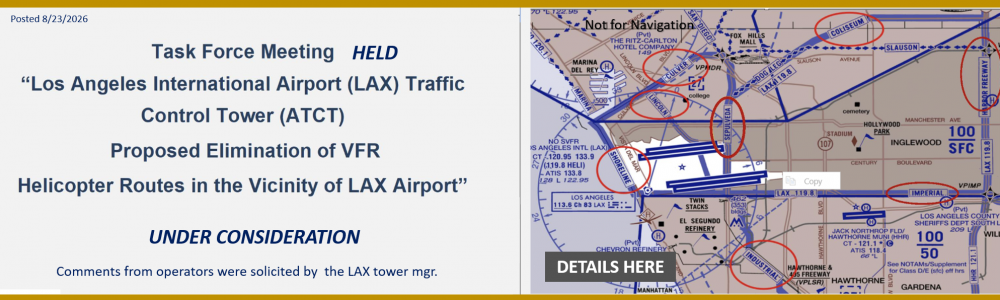
FAA Makes MAJOR Change for LAX Class Bravo (airspace surrounding LAX):
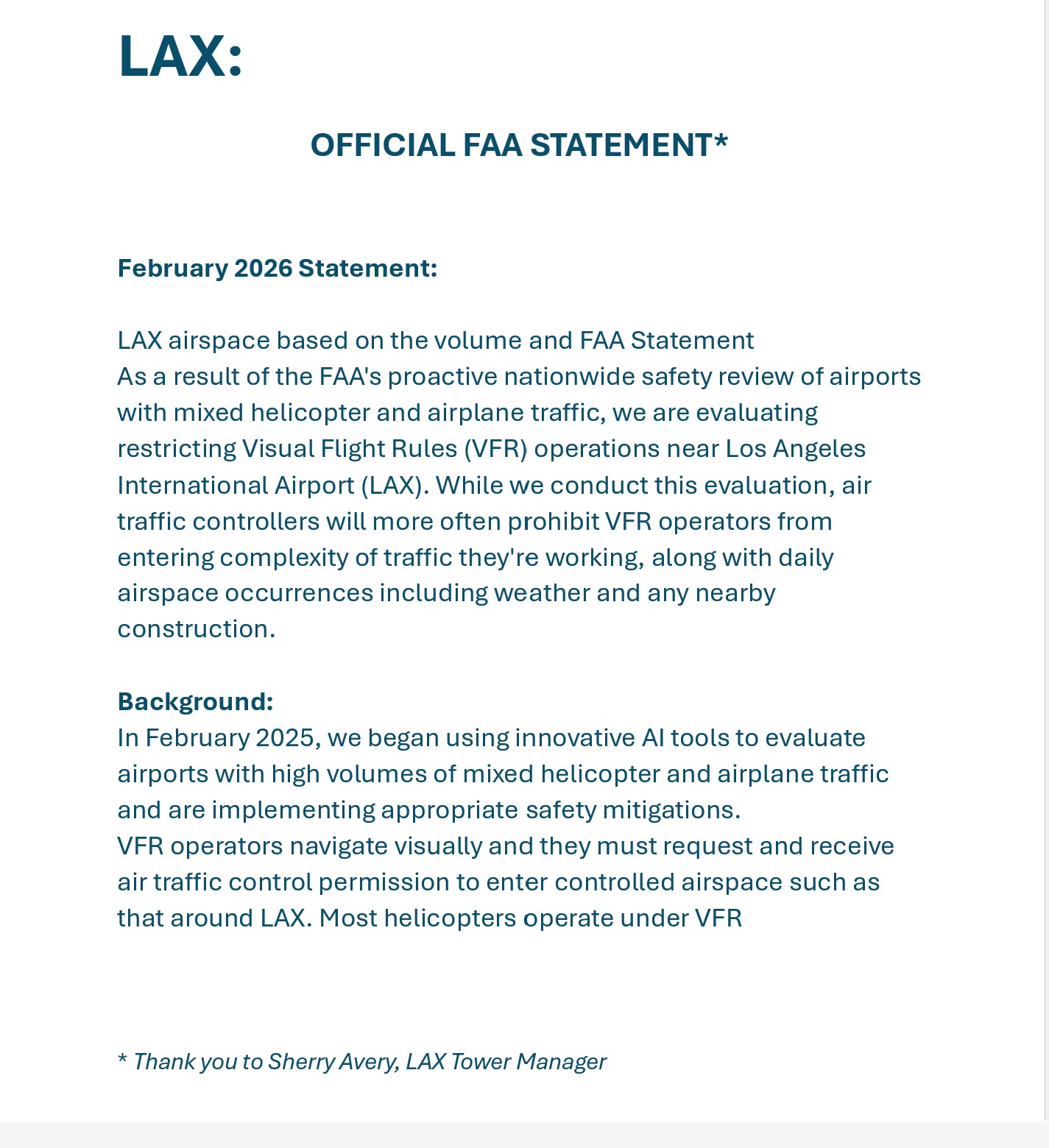
LAX TOWER Reacted:
After The Accident at Reagan International Airport LAX made the immediate precautionary steps and proposed restricting Helicopter Routes and canceling the Banner Tow route offshore from the LAX Coast. The Mini Route (VFR Transition Route) also was openly stated as available when staffing permitted only. LAX Tower Management addressed all Regan International Airport parallel issues with a pro-active strategy right away! Sherry Avery, Tower Manager is to be complimented.
WEBMASTER CONCLUSION (opinion): At SCAUWG.ORG I have observed politicians criticize the FAA. Like at the top of this page SCAUWG.ORG has published several of those comments. In a world like we have today, it is not unusual to witness finger-pointing. Critical comments might be expected for some that are not familiar with the Aviation environment today, and their opinions may have been influenced by some of the finger pointing.
However, my critical comment is to ask folks to recall an old saying, "Those who live in glass houses should not throw stones." The FAA makes upgrades on a National Basis which take time to implement. Undertaking that directive requires the ability to sign long term contracts. When congress keeps the FAA on a short-term fiscal string, entering needed contracts may often not be possible. Politicians who criticize the FAA for not doing more would be better served by criticizing Congress instead. -
Do you have more that should be included on this page, you are invited to contact CONTACTUS@SCAUWG,ORG
THANK YOU!